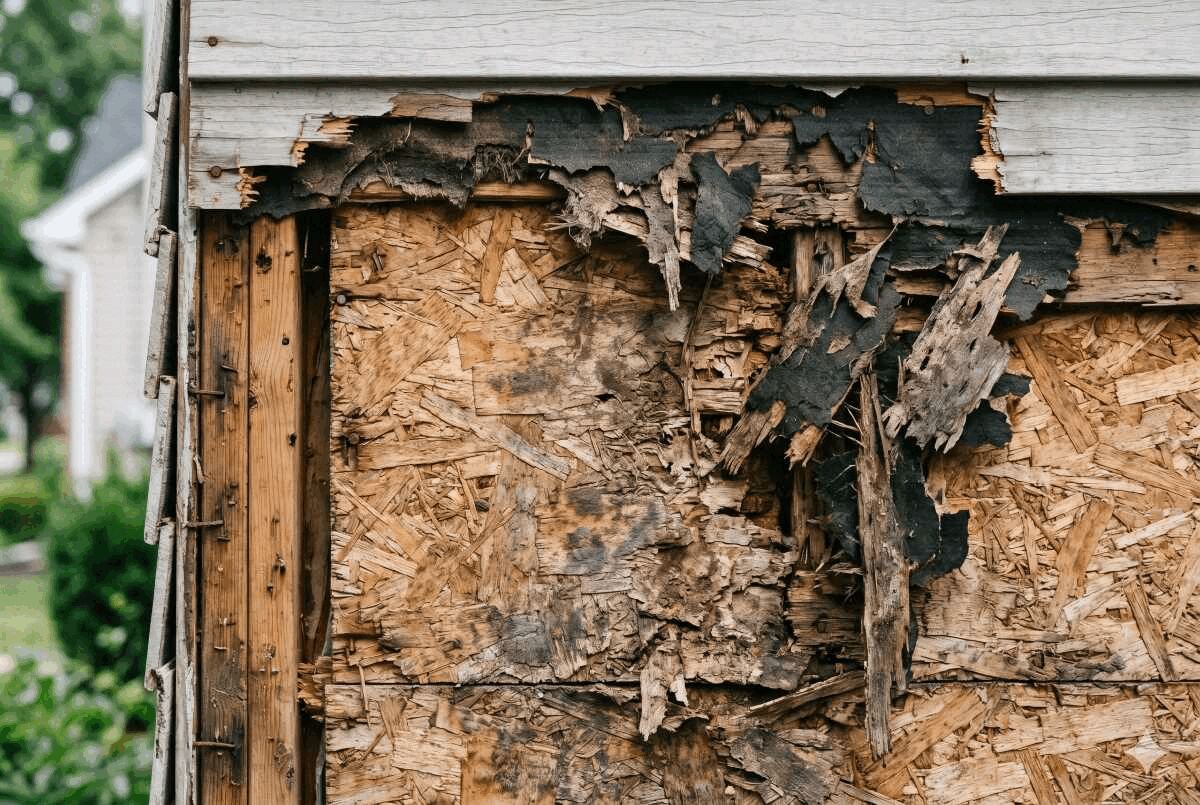
Replacing your home’s siding is an opportunity to improve its appearance and protection from the elements. It can also reveal hidden problems underneath the old siding. One issue homeowners may encounter is dry rot, a type of wood decay associated with fungal growth and moisture. If damaged areas are covered by siding, homeowners may not know there is a problem until the old materials come off.
At Risner Roofing, we know that finding hidden damage during a home improvement project can be concerning. Identifying dry rot during siding replacement provides an opportunity to address deteriorated wood before new siding covers the area. Understanding what causes wood rot and what it looks like can help you make informed decisions during your project.
Why Dry Rot May Be Found During Siding Replacement
Your siding helps protect the materials underneath it from rain and other outdoor conditions. However, damaged siding, failed seals, gaps, or other exterior issues may allow water to reach the wood behind the siding. If that wood stays damp, decay can develop over time.
The damage is not always visible from the outside. Old siding can hide affected sheathing, framing, trim, and other wood components. Removing the existing siding exposes these areas, making a siding replacement project an ideal time to look for signs of moisture damage.
Common signs that may indicate wood rot include:
Soft or spongy areas of wood
Cracked or crumbling wood
Darkened or discolored areas
Musty odors near damaged materials
Wood that appears brittle or weakened
Finding these warning signs does not necessarily reveal the full extent of the problem. A careful inspection can help determine which materials are damaged and where the moisture came from.
What Does Dry Rot Look Like Behind Siding?
Healthy wood should generally feel solid and maintain its shape. Wood affected by decay may look darker, cracked, brittle, or damaged. In more advanced cases, sections may crumble or break apart when inspected.
There may also be clues before the siding is removed. Warped or loose siding, peeling paint, staining, or recurring moisture problems can indicate that something is happening beneath the exterior surface. These signs do not always mean dry rot is present, but they are good reasons to take a closer look during siding replacement.
Why You Should Address Damaged Wood Before Installing New Siding
Installing new siding over deteriorated wood does not correct the underlying problem. Damaged materials may continue to weaken, and an unresolved source of moisture could affect surrounding areas or eventually damage the new exterior.
When dry rot or other wood decay is discovered, the affected material should be evaluated before siding installation continues. It is also important to determine how moisture reached the area. Depending on the situation, the source could involve exterior gaps, damaged flashing, roof runoff, or another part of the building envelope.
Addressing both the damaged wood and the source of unwanted moisture helps provide a sound surface for the new siding installation.
Siding Replacement Can Reveal Problems You Could Not See
One advantage of a siding replacement project is the opportunity to inspect areas of your home that normally remain covered. Once the old siding is removed, previously hidden wood becomes accessible.
This can be especially valuable when working on older homes or properties that have experienced leaks or exterior damage. Discovering dry rot at this stage allows the issue to be addressed as part of the project rather than covering weakened materials with new siding.
For homeowners in Austin and Houston, a thorough approach to siding replacement can help protect the investment you are making in your home's exterior.
Protect Your Home During Siding Replacement
New siding should provide your home with an attractive, durable exterior, but the materials underneath it matter too. If dry rot is uncovered during siding replacement, taking care of the affected wood and identifying the moisture source can help create a better foundation for your new exterior.
Risner Roofing serves homeowners with exterior home improvement solutions, including siding services. If you are considering siding replacement or are concerned about hidden moisture damage behind your existing siding, contact Risner Roofing today to discuss your project and schedule an evaluation.

Comments